INTAQT Showcases Key Project Outcomes at EAAP 2026
On 9 September 2026, the INTAQT project presented its latest research findings during a dedicated… Read more »
Hamburg, Germany, 11 September 2026
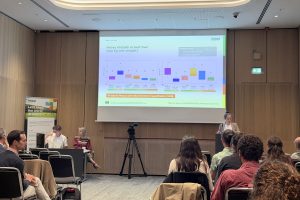
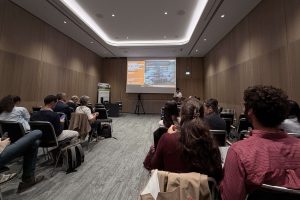
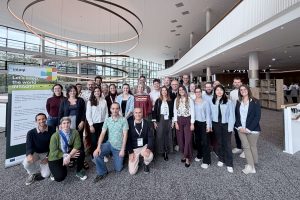
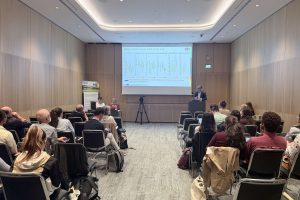
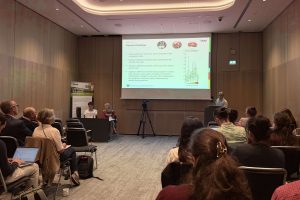
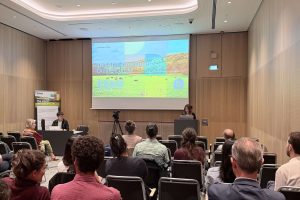
After five years of collaborative European research into the future of cattle and poultry production, the INTAQT project brought its work to a close with a Final Scientific Conference held at the CCH – Congress Center Hamburg and streamed live for remote participants. The event was organised in the aftermath of the 77th EAAP Annual Meeting and gathered researchers, industry representatives, policymakers and other stakeholders, to reflect on everything the project has achieved, and to discuss what its findings mean for the future of livestock systems across Europe.
Five Years of Work on “One Quality”
Since it began, INTAQT has worked to answer a central question: can livestock systems deliver high standards in product quality, sustainability and resource efficiency all at once, a concept the project has termed “multiperformance”? Over the five years that followed, partners built up evidence on the nutrition, sensory quality and safety of animal products. They also co-created solutions directly with farmers through Living Labs, and developed methods to measure the environmental impact of livestock systems.
That work also produced a set of decision-support tools for the sector, including authentication and prediction methods, a multicriteria scoring framework, and a dedicated web platform for evaluating livestock production systems.
The Final Conference gave the whole community a chance to see that work come together. The day opened with a look back over the project’s journey, followed by a session on how INTAQT engaged farmers, industry actors and other value-chain participants over the past five years to keep its research grounded in real-world needs.
The programme then turned to the project’s scientific findings. A session on nutritional value presented comparative results on the nutrient content of chicken and cattle products across different production systems, including vitamin E and B2 levels, a topic that drew detailed follow-up questions on how these values differ between farming systems, as well as a broader discussion on making this kind of nutritional data more usable for human nutritionists, for example through simple summary tables rather than raw distribution data. This was followed by sessions on the sensory qualities of animal products, how taste, texture and other attributes are shaped by different production systems, and on the health and safety dimensions of chicken and cattle products, examining how farming practices influence the safety and composition of what reaches consumers.
The morning closed with a demonstration of the project’s multicriteria scoring tool and web application, including the health-scoring framework built into it. In the afternoon, attention turned to the project’s Living Labs, the co-creation approach used throughout the project to test and refine solutions directly with farmers and value-chain actors, followed by a session on the authentication and prediction tools developed over the course of INTAQT’s work, including portable spectroscopy devices already used in cheesemaking to predict fat content and dry matter.
A session on environmental impacts and feed–food competition followed, presenting the project’s findings on the environmental footprint of livestock systems and the competition between feed and food production for land and resources. This generated some of the day’s most engaged debate: participants discussed why some of the most extensive systems showed the lowest environmental scores despite being widely perceived as more sustainable, and how the choice of metric, measuring impact per animal, per kilogram of product, or per hectare of land used, can significantly change how a system’s sustainability is judged. Several participants also stressed the importance of communicating results clearly for systems that are net producers of protein, rather than net consumers of it.
The day concluded where it began, with the question of multiperformance, as speakers drew together five years of findings to weigh whether livestock systems can truly deliver on quality, sustainability and efficiency at once. The answer that emerged over five years is a qualified yes: no single production system leads on every dimension, and the way performance is measured largely determines which systems come out ahead, so multiperformance is best pursued as a balance of trade-offs rather than a single ideal model. The day closed with a final wrap-up and reflections on what INTAQT leaves behind for the sector.
As the project draws to a close, INTAQT’s partners want to thank every speaker who contributed to the Final Conference, both those who have been part of the project’s consortium throughout its five years and those who joined from outside it to share their perspective. Their contributions, alongside the work of every researcher, partner and Living Lab participant involved since the project began, are what made it possible to turn a research question into practical evidence and tools for the livestock sector.
On 9 September 2026, the INTAQT project presented its latest research findings during a dedicated… Read more »
On July 16, 2026, Prof. Massimiliano Petracci from the Department of Agricultural and Food Sciences… Read more »
On July 11, 2026, Martina Bordini, post-doctoral researcher in the Department of Agricultural and Food… Read more »